Gear 03
The Small Parts That Steer
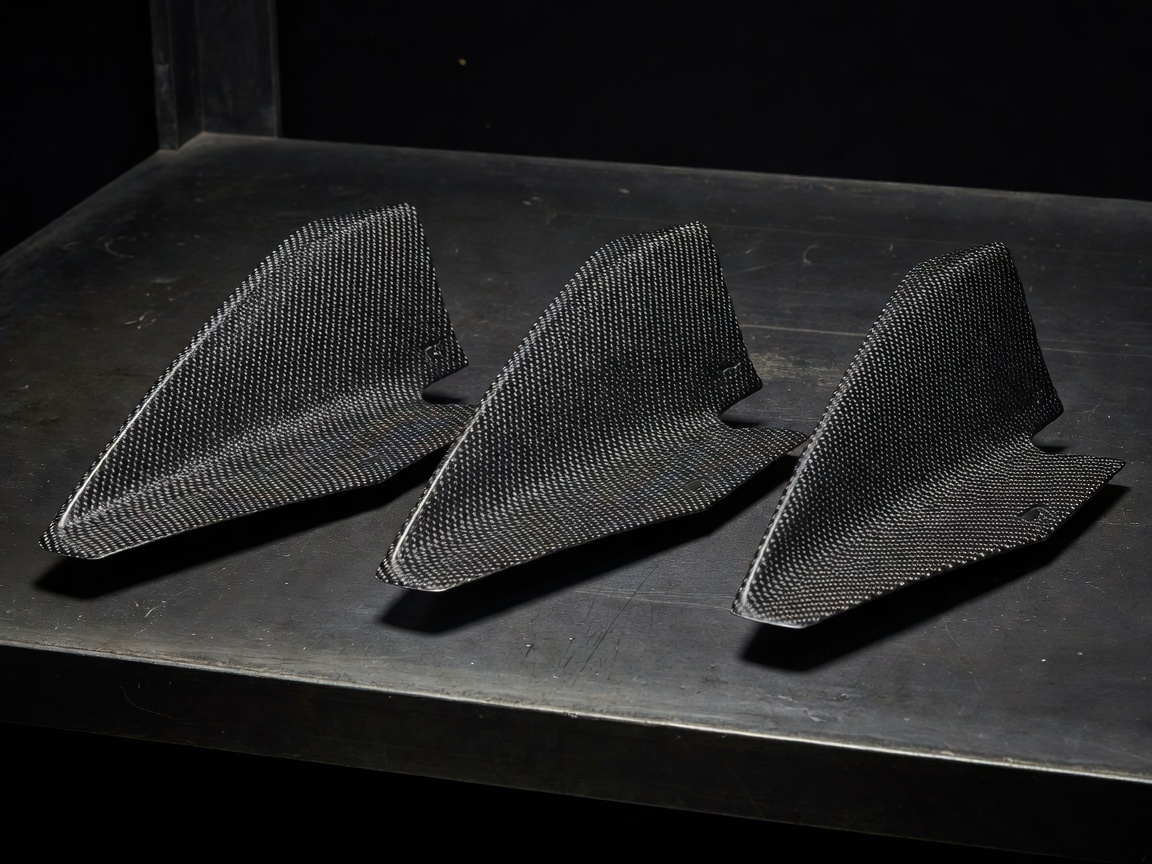
Fins are the steering, leashes are the seatbelt. Neither looks like much hanging in the shop, and both change how a board behaves more than most surfers realise. Swap a fin set and the same board can feel like a different shape.
Find your setup
What fins do under your feet
Every fin has a handful of measurements, and each one changes the feel. Base length gives drive: a longer base pushes you out of turns with more speed. Depth gives hold: a deeper fin grips the face in powerful surf but feels stiff in small waves. Rake, how far the fin sweeps back, sets the turn arc: more rake for long, drawn-out carves, less for quick pivots. Add total area, the foil shape and the flex pattern, and you've got the reason fin catalogues run to dozens of pages.
The set-up matters just as much. A single fin pivots from the tail and draws smooth lines. A twin is loose, skatey and fast. The thruster balances drive, hold and release, which is why it's the default on shortboards. A quad drops the centre fin for speed down the line and holds well in hollow waves. A 2+1 pairs a longboard centre fin with small side bites for controlled glide.
Then there's how the fins attach. FCS II uses a tool-free click-in plug system; Futures uses a single long tab that runs through a box in the board. Both work well and both have huge fin ranges, but they aren't interchangeable, so check your boxes before buying. Glass-on fins, bonded permanently, offer a classic feel and no box to break, at the cost of swapping and travel.
Choose your level
Fin and leash advice by level
Leave in the fins that came with your board; on a soft-top, flexible plastic fins are safer for you and everyone around you. Spend your money on a decent leash instead: the same length as your board or a foot longer, around 7 mm thick, with a double swivel so it doesn't twist into knots.
Now fins start to matter. Get a set sized to your weight; brands publish charts, and FCS's medium covers roughly 65 to 80 kg while large covers about 75 to 90 kg. Then change one thing at a time. More rake for longer turns, a more upright template for tight direction changes, and note how each feels before you judge it.
Build a fin quiver around conditions: a bigger, stiffer set for powerful surf, something looser for weak days and quad rears for open walls. Comp leashes of 5 to 6 mm cut drag in small waves; step up to 8 mm or more when it's heavy, and retire any leash with nicks or a stretched cord.
Fin set-ups compared
A quick reference to how each layout feels and where it works best.
| Set-up | Feel | Best waves | Typical boards |
|---|---|---|---|
| Single fin | Smooth, drawn-out, pivots from the tail | Peeling points | Logs, mids |
| Twin | Loose, skatey, fast | Small, open faces | Fish, retro twins |
| Thruster | Balanced drive, hold and release | Almost anything | Shortboards |
| Quad | Fast down the line, holds in the barrel | Open walls, hollow waves | Fish, step-ups |
| 2+1 | Controlled glide, stable turns | Small to mid | Performance longboards, mids |
Choosing a leash that holds
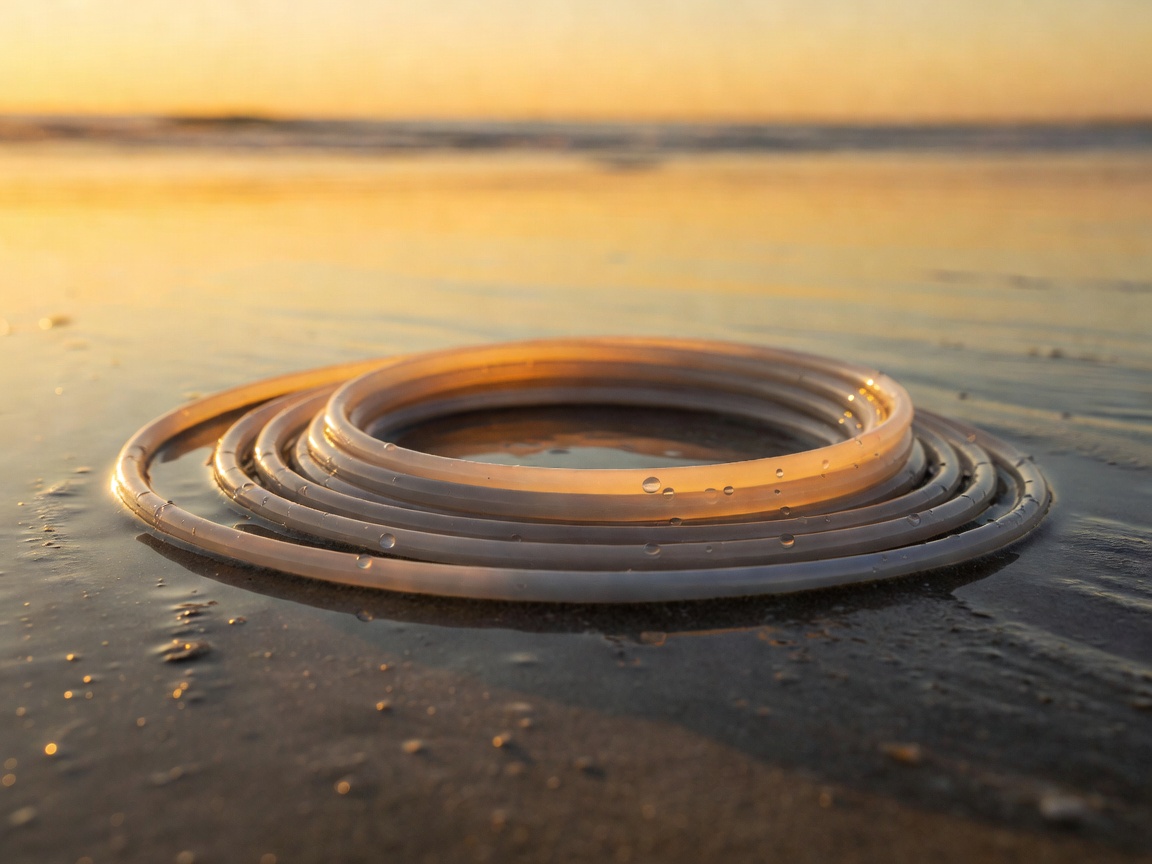
A leash keeps your board from hitting other surfers and saves you a long swim. Length first: roughly your board's length, or a foot longer for bigger surf. Too short and the board snaps back at you; too long and it tangles and drags.
Thickness is a trade-off between drag and strength. Comp leashes around 5 to 6 mm suit small, clean waves. Regular 7 mm cords handle everyday surf. Big-wave leashes of 8 mm and up are built to survive heavy hold-downs. A wide rail saver stops the cord slicing into your tail, and a padded cuff with a quick-release tab matters more than it looks when you're tangled in a set.
Creatures of Leisure, Dakine and FCS all make reliable leashes. Whatever you buy, rinse it in fresh water, store it uncoiled and check the leash string at the plug every few weeks; that thin loop is the most common failure point.
Removable fin systems: pros and cons
Pros
- Tune one board for different waves
- Pack fins separately for safer travel
- A broken fin is a cheap swap, not a repair job
- Try new templates without a new board
Cons
- FCS II and Futures boxes aren't interchangeable
- Boxes can crack under a hard hit
- Lost fins and screws on the beach add up
- Choice overload can distract from surfing